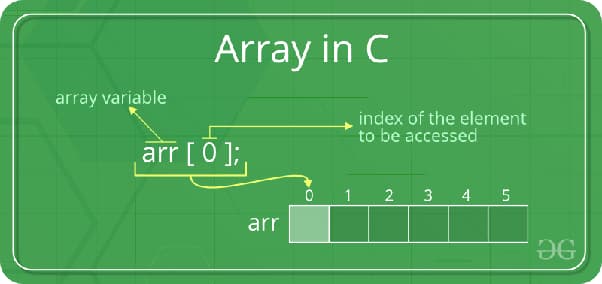
In many programming languages like PHP, Javascript, C, and Python, developers quickly encounter the concept of zero-based indexing. This seemingly quirky convection, where array indices start at 0 rather than 1, has historical roots and ties closely to the low-level implementation of data structures in computer memory.
The Foundations: Memory Representation and Pointer Arithmetic
In many programming languages, arrays and lists are implemented as contiguous blocks of memory. Each element in the array is stored at a specific memory address, and the index of an element serves as an offset from the beginning of this memory block.
Zero-based indexing aligns with the principles of pointer arithmetic, a fundamental concept in low-level programming. Pointer arithmetic involves manipulating memory addresses directly and starting indexing at 0 simplifies these operations.
The Mathematical Connection
The choice of zero-based indexing also aligns with mathematical conventions. In mathematics, sequences often start with the first element at position 0. This convention naturally carries over to programming, promoting consistency between mathematical thinking and programming practices.
A Simple C Example for Illustration
Let’s take a closer look at a simple C program to illustrate these concepts:
#include <stdio.h>
int main() {
int numbers[] = {10, 20, 30, 40, 50};
printf("Array address: %p\n", (void*)numbers);
size_t arrayLength = sizeof(numbers) / sizeof(numbers[0]);
for (size_t i = 0; i < arrayLength; ++i) {
printf("Value at index %zu: %d, Memory address: %p\n", i, numbers[i], (void*)&numbers[i]);
}
return 0;
}